Showing posts with label beyond coal. Show all posts

Wednesday, November 4, 2015

Permit to Pollute?

FirstEnergy has a coal ash problem, and it wants us to deal with it.  Since 1975, the Beaver County power plant has pumped about 20 billion gallons of ash mixed with water to an impoundment called Little Blue Run on the border of Pennsylvania and West Virginia.  The problem is that the ash is toxic: it contains loads of heavy metals such as arsenic, lead, and cadmium, and other harmful pollutants like selenium and boron.  For years, this pollution has been finding its way into groundwater, wells, and streams, and even the air as the ash dries and blows around.

In 2012, FirstEnergy was ordered to close Little Blue Run because of the well-documented damage it was doing to the surrounding environment, nearby property, and neighbors’ health.  So FirstEnergy began to look for other places to dispose of this toxic waste.  It has now set its sights on the landfill at the Hatfield’s Ferry power station, a plant that FirstEnergy abruptly retired in 2013.  The ash would be dried out, loaded onto barges, hauled up the Ohio and Monongahela Rivers for 113 miles, then unloaded onto trucks and dumped at the landfill across the river from Masontown.

The proposed route between Little Blue Run (upper left) and Hatfield's Ferry (lower right) along the Ohio and Monongahela Rivers. 
But this landfill has its own set of problems.  The original landfill had no liner, and toxins from the ash disposed there have been contaminating the groundwater and surface water since at least 2001.  The most severe contamination is from arsenic, which has been found in concentrations up to 342 times the legal limit in monitoring wells around the site.  Exposure to arsenic can cause damage to the liver, kidneys, brain and nervous system, and can cause cancer.  Other contaminants that exceed federal standards are aluminum, boron, chromium, manganese, molybdenum, sulfate, and total dissolved solids (TDS).  There are at least seven private water wells within a two mile radius that are at risk of groundwater contamination, and one public water intake.

In 2006, the landfill was expanded and the new portion included a liner.  However, the original landfill remains unlined, and continues to leach pollutants.  The new lined portion partially overlaps the old portion, so it is difficult to know whether the liner is actually preventing additional toxins from contaminating groundwater.

In 2008, the landfill’s operator was fined for the contamination, and order to take corrective measures.  However, it is not clear that these corrective actions have been consistently followed, or whether new pollution continues to leach out from the site. 

A view of Little Blue Run courtesy of vice.com. Click the image for Vice's coverage of this impoundment. 
FirstEnergy is desperately trying to avoid having to build a new coal ash landfill that meets current federal standards for disposal of this waste that has already proven to be dangerous.  So they are trying to find the cheapest way possible to get rid of it.  First it announced it would ship it to the unlined pit in Labelle, but ongoing pollution problems at that site have prevented it from being able to accept waste from new sources.  So now the company has turned its attention to the Hatfield’s Ferry dump, yet another site with unresolved problems.  FirstEnergy, three strikes and you’re out.

In addition to the risks posed at the sites themselves, the transportation of the ash on open barges risks contaminating the Monongahela.  The Mon has long suffered from industrial pollution and acid mine drainage, and was at one time mostly dead ecologically.  However, it has begun to recover, and was voted River of the Year in 2013.  Multiple efforts are underway to encourage river-centered tourism and recreation, and transportation of millions of tons of toxic waste on open barges seems incompatible with that vision.

The Sierra Club, represented by Earthjustice, appealed a decision by the Pennsylvania Department of Environmental Protection (DEP) allowing FirstEnergy Generation, LLC to dispose of more than 17 million tons of toxic coal ash from the Bruce Mansfield Power Plant into a closed power plant landfill in Western Pennsylvania.
Bruce Mansfield power plant. 
In response to the DEP’s approval of the permit Charles McPhedran an attorney from Earthjustice and Tom Schuster, Pennsylvania Beyond Coal Campaign Representative for the Sierra Club released the following statements:

“This permit puts neighbors at risk” Charles McPhedran, an attorney with Earthjustice said.  “There are several private water wells and one public water intake that are at risk from contamination from this site, not to mention the risk up and down the rivers from transport of this ash. DEP needs to protect the families of Western Pennsylvania, not make them a dumping ground for FirstEnergy.”

“Toxins from the ash disposed at the Hatfield’s Ferry site have been contaminating nearby water since at least 2001. Arsenic has been found in concentrations up to 342 times the legal limit in monitoring wells around the site, and continues to violate health standards” Tom Schuster, Pennsylvania Beyond Coal Campaign Representative for the Sierra Club said. “Exposure to arsenic can cause damage to the liver, kidneys, brain and nervous system, and can cause cancer.  DEP needs to protect this community and require FirstEnergy to clean up this site before any more toxic ash is dumped.”


The Department of Environmental Protection should not issue a permit to all FirstEnergy to simply move its toxic liability from one community to another.  If it must dispose of its ash at Hatfield’s Ferry, it should be required to completely clean up the existing site, line the entire landfill, and monitor extensively to ensure new pollution does not occur.  Better yet, the company should avoid barging the ash up our rivers altogether, and build a state of the art landfill on site.

Thursday, November 21, 2013

Ontario, Canada, Goes Coal Free

Today Ontario, Canada, is showcasing a path for a world working to prevent runaway climate change. Today, Ontario retired their last coal-fired power plant. Part of a bold plan launched by former Ontario Premier Dalton McGuinty in 2003 to cut pollution in the province, this is great news for everyone who loves clean air and is working to provide a safe and liveable planet for future generations. 
What's more, the steps Ontario has taken over the past decade to retire its five coal-fired power plants is a great guide for the U.S. in making a speedy transition to a modern, clean, carbon-free energy system. 
Skyline_of_Toronto_viewed_from_Harbour

What can we learn from Ontario?
1) Be honest about the costs of coal. In 2003 Ontario looked at the full cost of coal, both the costs of coal-generated electricity, and the health costs the province was paying related directly to the health costs of burning coal. An honest accounting concluded that coal is among the most expensive ways to generate electricity.

2) Be bold. Long before other states and cities were talking about phasing out coal, then Premier McGuinty announced he would lead the effort to replace all the coal plants in a decade. This took a lot of courage, but also a profound belief in our scientists and engineers to imagine and build a coal-free electricity sector.

3) Invest heavily in energy efficiency. The province demonstrated that the cheapest source of power is efficiency, or reduced demand. In fact, according to Scientific American, these savvy actions made Ontario one of the first places in the world where energy demand began to decline, rather than increase.

4) Provide clear and fair rules for clean energy developers. With a clear roadmap and and balanced incentives wind power quintupled over the past 6 years in Ontario. Today wind and energy efficiency will make up much of the replacement for the retiring coal plants. A carbon-free grid is now within reach, as clean energy continues to grow and will back out the remaining natural gas.
This move by Ontario is the latest in a string of great clean energy news across North America. Last week the Tennessee Valley Authority announced the retirement of 3,300 megawatts of coal power in the Southeastern U.S. Earlier in 2013, Los Angeles and Chicago both announced they were going coal-free, with L.A. even announcing a major solar power deal with the Moapa Band of Paiutes in Nevada. The U.S. has been ditching coal (as fast as its investors), because a mix of hard-hitting grassroots advocacy, new EPA protections, and rising coal prices, has brought about the retirement or announced retirement of 155 coal plants.

With the largest grassroot environment movement in the U.S. working together to de-carbonize the electric sector, activists are fighting for clean energy and climate solutions from coast to coast. In the past week activists in Florida and Arizona rallied for solar power; North Dakota approved a new wind farm; Sudbury, Massachusetts just flipped the switch on a solar array that will save the city $100,000 annually.

This is also the latest in a string of great clean energy news across the globe. Sparked by the President's climate action plan which called for an end to public financing of coal overseas, the United Kingdom and multilateral banks like the World Bank and the European Investment Bank have also stopped throwing taxpayer dollars at dirty coal projects. These governments and institutions will instead be investing in clean, renewable energy.
While coal has powered the U.S. economy for much of the 19th and 20th centuries, we now know it is the leading source of climate disruption, it pollutes our air and makes our kids sick, and it has no place in a modern, high-tech economy. We live in the most innovative country on earth -- the first country to put a man on the moon, the nation that brought the Internet to the world. Our neighbors to the north are showcasing leadership. Let's build on their leadership, our incredible progress here in the U.S., and get to 100 percent clean energy in less than two decades. I know we can.
-- Bruce Nilles, Senior Director of the Beyond Coal Campaign

Friday, June 21, 2013

Acid Rain: Not Just an 80's Throwback

By Phil Coleman, Co-Editor The Sylvanian

In the 1980’s, the general public became aware of acid rain. Ecologists had been aware of acid precipitation for some time before that, but, as is usually the case, time passed until the term caught on. “Rain” is a better catch word than “precipitation.” And the fact was that sulfur and nitrous oxide compounds were in the air and coming to earth in rain, snow, sleet and plain old dust.

These compounds and a handful of others – especially mercury – were poisoning lakes and stunting trees, as well as giving people health problems. Acid rain was a growing problem because industrial processes were growing. The most serious contributor was the burning of coal. Coal-fired power plants, without adequate emissions cleaning processes, were the worst perpetrators.

Another Look   

But then along came the global climate crisis. Carbon dioxide emissions are affecting the ozone layer, causing the temperature to increase, glaciers to melt, and oceans to rise, and the climate to change, which makes farm land into desert and encourages violent storms. 

Global climate disruption is a serious world problem. And the culprits who produced acid rain are the same culprits who are the principal producers of climate disruption -- coal-fired power plants. Faced with a new problem, the coal industry developed a theory that carbon from coal plants could be “sequestered” by being pumped underground where it wouldn’t harm the ozone layer.

The industry called this “Clean Coal” technology. Sequestering carbon is technically doable if you ignore the expense involved, the energy required to transport and pump the carbon, and the increase in coal burning required to produce a unit of electricity. But the industry loved it. Companies petitioned the government to fund studies and trials to sequester carbon. They didn’t wait for the results: billboards proclaiming “Clean Coal” went up all over coal country.

The industry is much better at advertising than is the environmental community. Our response was vigorous but not as effective. And no one is talking about acid rain anymore.

Juggled

We all admire the juggler who can keep three or more balls in the air at once. But most of us most of the time are not jugglers. We can’t keep two slogans going at once. When we learned about global warming, we lost track of acid rain. The facts haven’t changed, but our attention was diverted. Isn’t it remarkable that the power plant wanted to continue polluting our rivers and lakes and stunting our forests even while they were proclaiming Clean Coal?

Fortunately, not everyone has dropped the ball. Sierra Club’s Beyond Coal campaign has been at work forcing the dirtiest power plants out of business. Using the Clean Air Act, they filed suit just last year against the Homer City, PA, power plant, one of the biggest polluters and one of the slowest to clean up.

The global climate crisis is a serious global problem. But let’s not forget that acid rain is an ongoing and closely-related problem. And Pennsylvania is one of its targets.

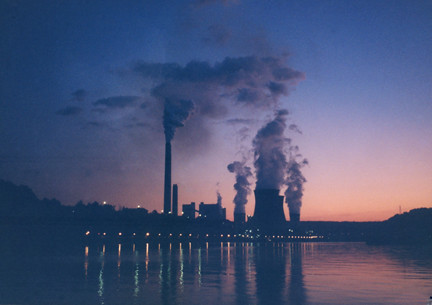
Photo Courtesy of glogster.com